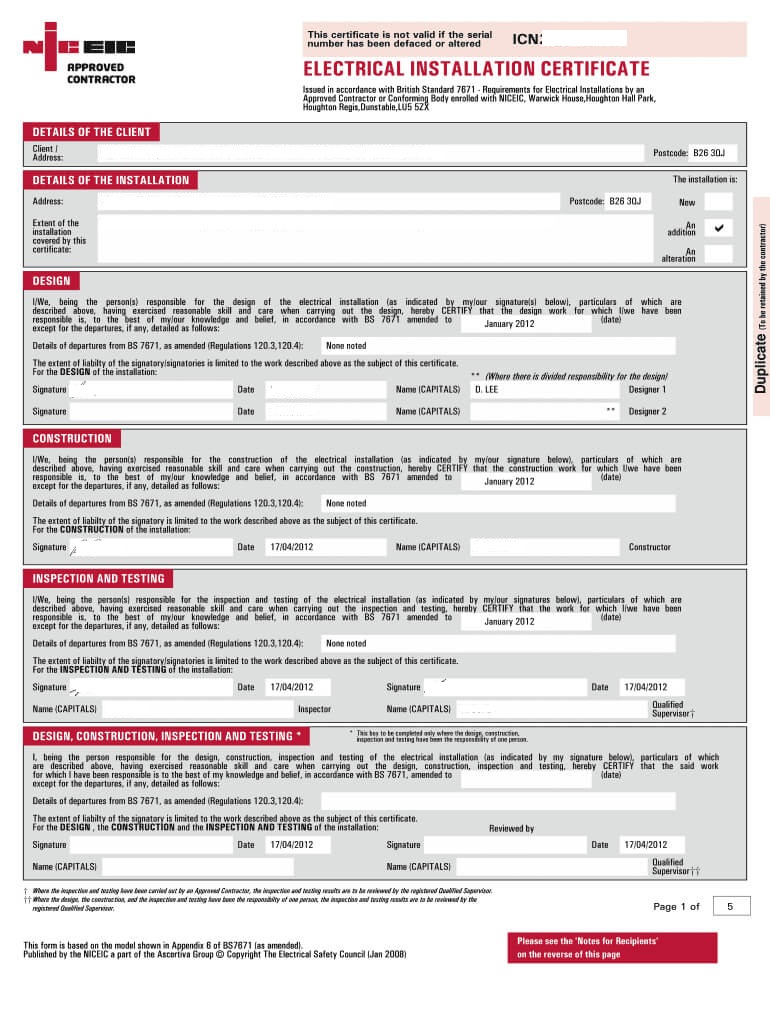
An Electrical Installation Certificate (EIC) is a formal document that a qualified electrician or electrical engineer produces after inspecting the electrical systems in a property. It confirms that the installations are safe, properly fitted, and well maintained. So whether you own a small flat or manage a large industrial site, this certificate plays a key role in keeping your property compliant.
Electrical Safety Certificate for Landlords
If you’re a private landlord, the law requires you to have a skilled, competent professional inspect and test your property’s electrical installations at least once every five years. Once that inspection is done, you’ll need to:
Get a report from the professional, covering what they found and when the next inspection is due
Give a copy to every occupant within 28 days of the inspection
Send a copy to the local housing authority within 7 days, if they ask in writing
Keep a copy until the next inspection is due, then hand it to whoever carries that one out
Provide a copy to any prospective tenant who asks for one in writing, before they move in
Domestic Electrical Safety Certificate
Once your property has an Electrical Installation Condition Report (EICR), you’ll receive an electrical safety certificate alongside it. So it’s worth keeping both documents safe — together, they show your property meets ongoing electrical safety standards. As with the inspection itself, you should renew this every five years.
Electrical Safety Inspections
You’ll need a “qualified and competent” professional to inspect and test your property every five years. To help with this, the government publishes guidance on finding properly certified electrical safety professionals. For example, you can use the competent person scheme to track down a qualified inspector near you.
During the inspection, your electrician will use these codes to flag any work that needs doing:
Code 1 (C1): There’s an immediate danger and risk of injury. Often, the inspector will fix C1 issues on the spot, before they even leave.
Code 2 (C2): The property has potentially dangerous conditions. You’ll need further investigation soon.
Code 3 (C3): There’s room for improvement, but nothing urgent. The report is satisfactory as it stands.
Cost of an Electrical Installation Condition Report (EICR)
Pricing depends on a few things: the size of the property, how many rooms it has, how many fixed electrical systems need testing, and your electrician’s hourly rate. As a rough guide, a one-bedroom rental typically costs around £125, while a five-bedroom property can run past £300. Most EICRs land just above £200.